- We write blogs to bring traffic to our clients’ sites through organic search traffic for long-tail queries. They should have high-quality, relevant content that matches the intent of the searcher.
- Aim to outrank anything currently ranking for the keyword you’re shooting for. Use this checklist and look at the examples included to understand Venta’s standard for monthly blogs.
Our Goal
-
Create relevant content for clients that has the ability to rank in search engines and to increase client leads.
1. Use the Keyword Research
Keyword research helps us know what people are searching for and which blog topics have a chance of ranking and bringing in organic traffic. Consult the latest keyword research or content calendar created for the client, which can be found in Teamwork links or notebooks. Here you will be able to find a list of approved or set topics for upcoming blog posts.
Choose a topic from the list or prepare to write the post scheduled for that month. Some clients may have blog topics set by what video assets we have prepared to go along with them. For these clients, you'll need to check their Google Drive folders for the prepared assets and go from there.
Keyword research may look like this:
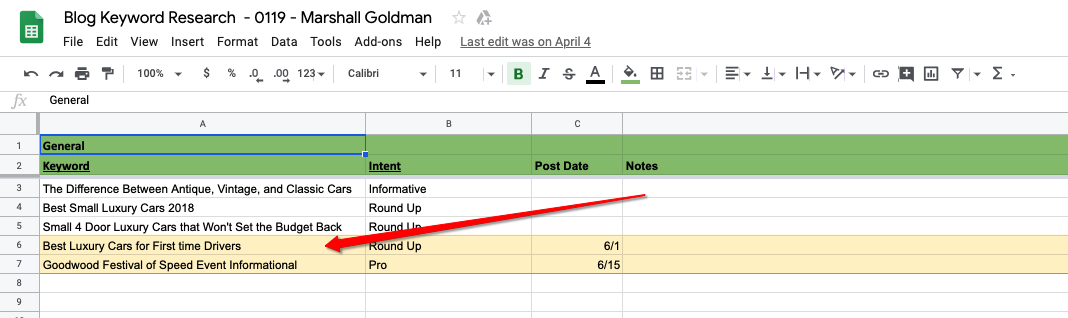
Note: Normally all blog clients will have suggestions based on keyword research in their teamwork under "Notebooks"
2. Research SERPs and Get to Know Topic
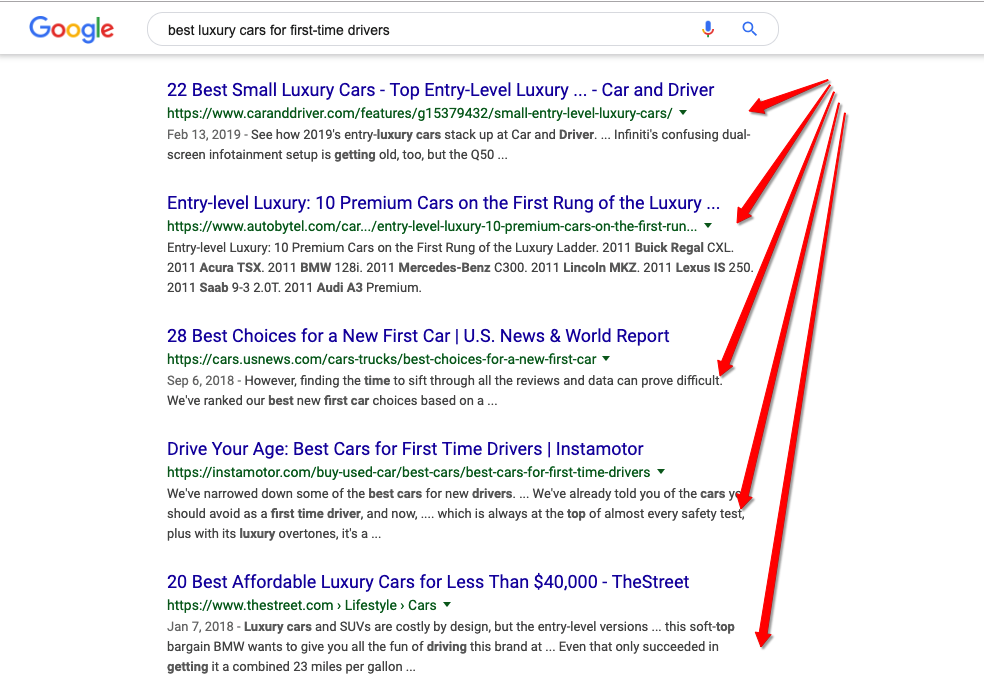
A SERP is a page that is ranking on Google for the same keyword that you are targeting. Search the keyword and open the pages ranking on the first page of Google. What is good about them? What can you do better? Use them to learn about the topic and to understand what searchers are looking for when they type in your query.
3. Plan Keyword-Focused Headings
Organize your blog into different sections that make it easy to follow for the reader. If it is a round-up style blog, organize the blog with your picks for the "Top X" you're writing about.
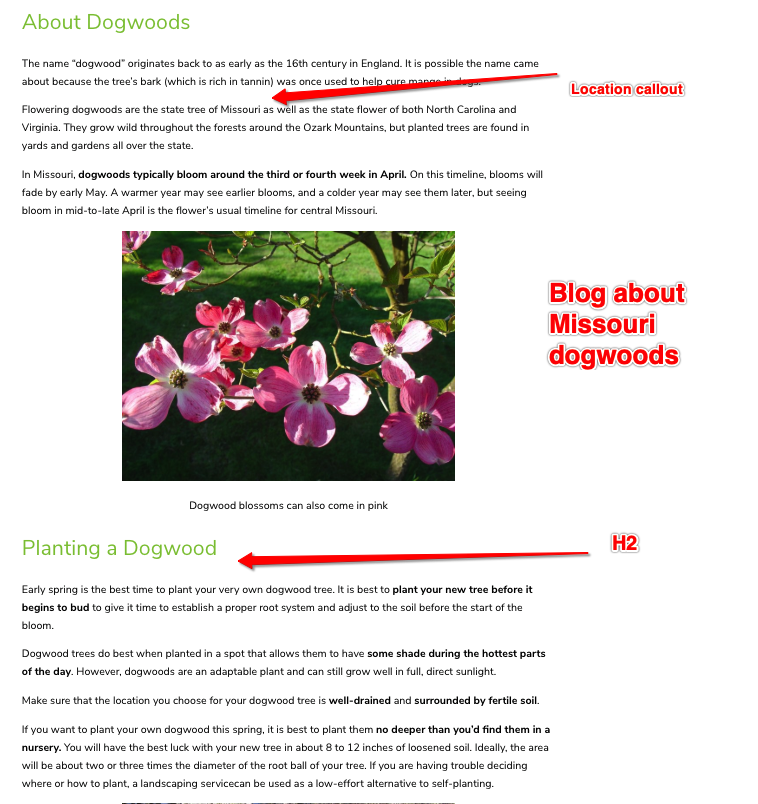
If your topic is broader, use the SERPs to decide what H2s and H3s are most relevant to the searcher and plan your information to follow this structure. Be sure to keep your keyword and location in mind when writing these.
4. Write 600-1000 Words of Content
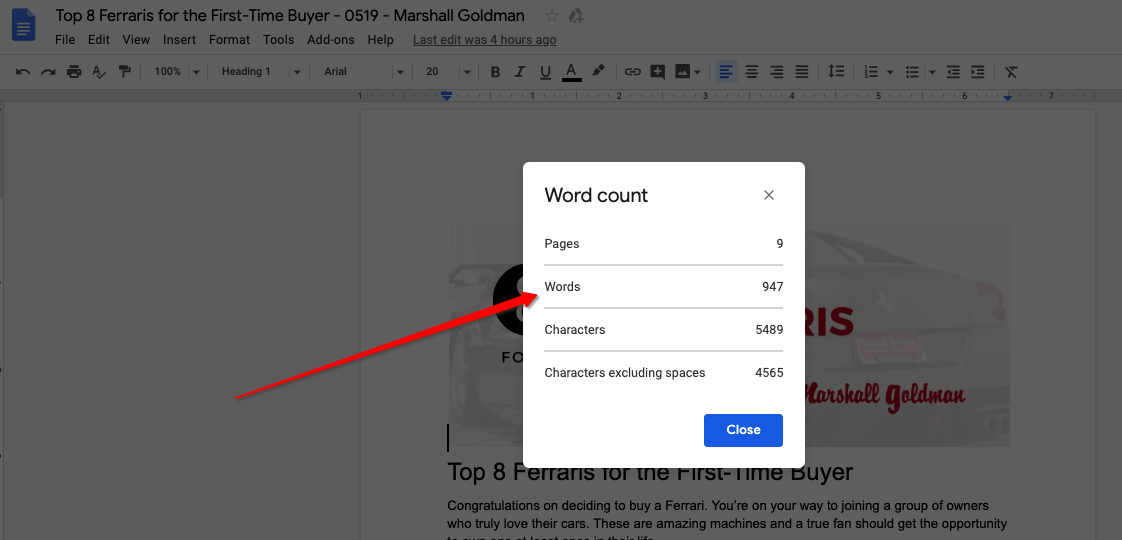
As a rule, blogs should have enough content to compete with the top-ranking pages for that keyword. Usually, 600-1000 words is sufficient to compete. Occasionally that means writing more than 1000 words. Use your best judgment and write what you need to in order to rank.
5. Consider the Audience & Location
Keep in mind who the searchers are and where they are searching from. If they are from a certain state or city, make the content creative and specific to that area. Add references to local customs, weather, hot-spots or anything else that makes it unique.
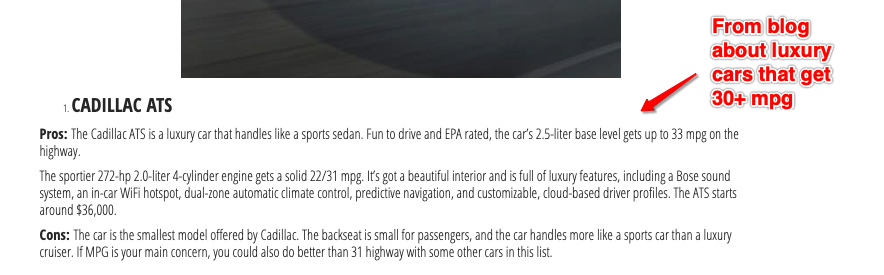
Also, whether your blog is local or national, write for your intended audience. If you are writing for car-enthusiasts, pick up on the lingo and writing style of other bloggers. Make it feel creative and a natural, as if you are the expert on the topic.
6. Add Internal Links
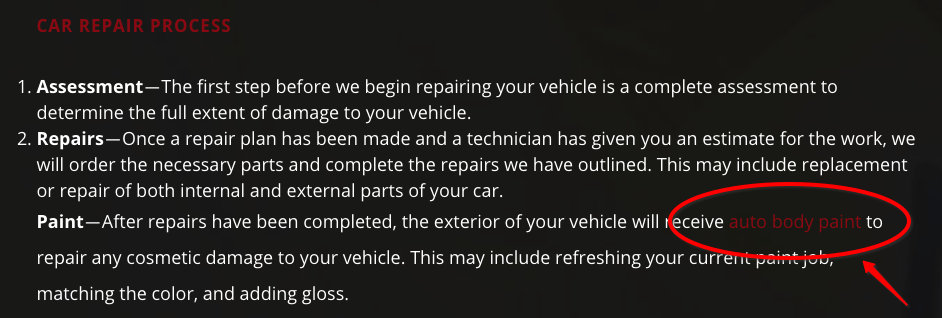
Internal links help navigate users from page to page on the website, and they also pass “juice” from page to page on the site, helping with the site’s overall ranking authority.
As a general rule, include an internal link every 200-250 words. You can use your discretion to add them in a natural way. Link to service pages, other blogs, or wherever relevant information is found on the site.
8. Make a Header Image
Most blogs will require you to use Canva to make some type of header image. The typical header size is 1200 x 600. Be creative and use client branding if possible.

9. Add Above – and Below – the fold CTAs
Add a CTA above the fold (before the reader has to start scrolling on the page). Make it natural and direct. Include an internal link to a contact page if there is no contact form on the page. A good place to add one is below the H1 and before your first H2. You can skip the above-the-fold CTA on a blog if it feels too salesy or unnatural. It should never make people want to bounce off the page.
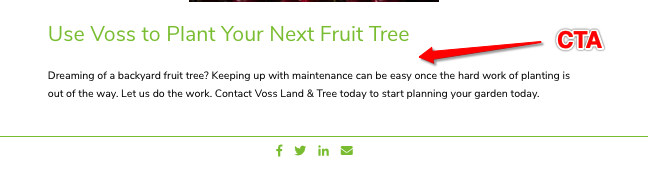
At the end of the blog, add a concise CTA of what we want people to do next. Consider the content funnel. Include an H2 to draw attention to the CTA, and include an internal link if there is no contact form on the page.
Miscellaneous Writing Tips
- Use active voice.
- Break up paragraphs into short, 2-3 sentence bites.
- Use bolding and bulleting for readability.
- Avoid clichés.
- Grammar and spell check everything.